Elevation's Influence on Scoring Patterns in Outdoor Athletic Competitions
Avery Carter · Aug 17, 2026
Elevation's Influence on Scoring Patterns in Outdoor Athletic Competitions
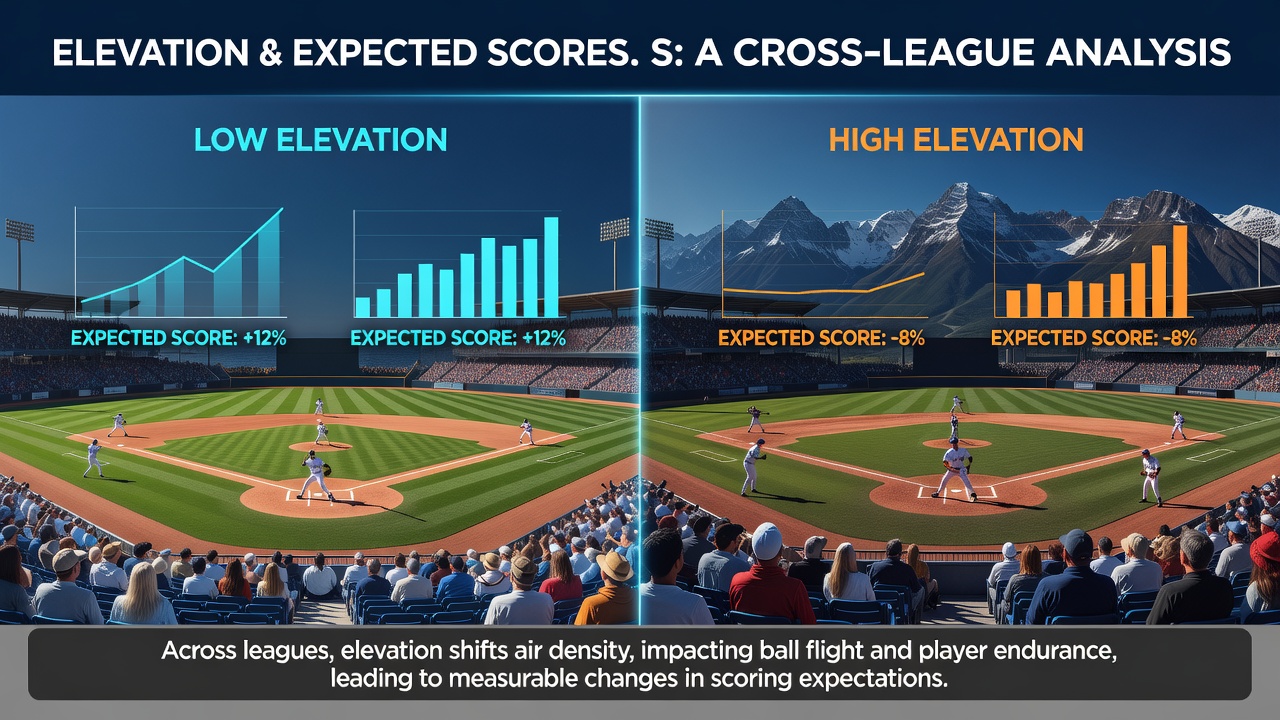
High elevation changes air density in ways that directly alter how balls move through space, and observers note this effect across multiple outdoor leagues where venues sit thousands of feet above sea level. Researchers have tracked these shifts in baseball, soccer, and tennis for decades, and data shows that reduced atmospheric pressure allows projectiles to travel farther with less drag while also affecting player oxygen intake during prolonged efforts. Leagues schedule matches at sites like Denver's Coors Field or Andean soccer stadiums, and analysts compile expected score adjustments based on historical performance records from those locations.
Air Density and Projectile Dynamics in Elevated Settings
Lower air pressure at altitude reduces resistance on spheres and other objects in flight, so baseballs carry farther when hit, soccer balls maintain velocity over longer distances, and tennis balls exhibit altered bounce and spin characteristics. Studies from institutions such as the University of Colorado have quantified these changes, and figures reveal that a home run hit at 5,280 feet travels approximately 10 percent farther than an identical contact made at sea level. Soccer leagues operating in cities like Quito or La Paz record higher average shot distances and goal tallies during matches played above 2,500 meters, while data from the National Oceanic and Atmospheric Administration confirms consistent seasonal variations tied to temperature and humidity alongside elevation.
Coaches adjust strategies accordingly, and teams prepare specialized training regimens that account for thinner air when traveling to high venues. Pitchers in Major League Baseball face steeper challenges at altitude because breaking pitches lose movement, and this leads to elevated on-base percentages in box scores compiled over multiple seasons. Similar patterns appear in international tennis tournaments held at moderate elevations, where serve speeds increase while rally lengths sometimes shorten due to faster ball travel.
Endurance and Physiological Responses During Competition
Reduced oxygen availability forces athletes to adapt pacing and recovery intervals, and this physiological shift influences scoring rates in events that extend beyond ninety minutes. Soccer matches at elevation often feature more substitutions and fewer late goals because players experience accelerated fatigue, whereas data from multi-week tennis events shows altered point-win percentages in deciding sets. Researchers track heart-rate variability and blood-oxygen saturation in these environments, and reports indicate measurable drops in sustained high-intensity output once athletes exceed certain altitude thresholds.
Leagues maintain medical protocols that address altitude-related risks, and governing bodies require acclimatization periods for visiting squads in some competitions. Australian Institute of Sport publications document comparable effects during endurance segments of outdoor events, and these findings help teams forecast how expected totals shift when schedules include highland fixtures. August 2026 brings renewed focus on these variables as several leagues begin planning for away fixtures at notable elevations, with analysts updating models that incorporate both historical scoring data and updated meteorological inputs.
League-Specific Adjustments and Historical Records
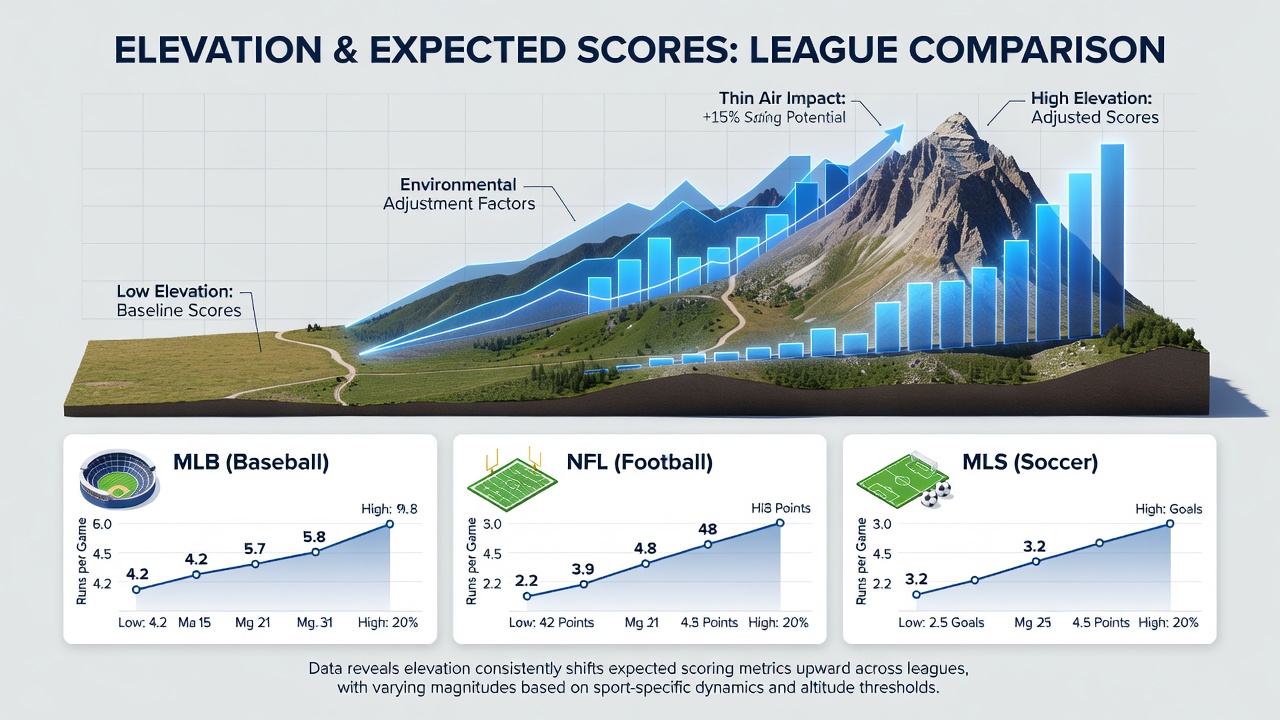
Major League Baseball maintains separate park factors for Coors Field that reflect long-term offensive inflation, and those adjustments feed directly into expected run calculations used by statisticians. European soccer competitions occasionally feature matches at mid-elevation sites, and goal-scoring averages compiled over decades demonstrate consistent upward trends compared with lowland counterparts. Tennis governing organizations publish surface and altitude coefficients that influence scheduling decisions, and these metrics help tournament directors anticipate match durations and point totals.
Cross-league comparisons become possible when researchers aggregate datasets from baseball, soccer, and tennis, and patterns emerge around how elevation interacts with other variables such as wind and temperature. One study released through Canadian sport-science channels examined multiple outdoor codes simultaneously and found that scoring inflation scales nonlinearly once venues surpass 1,500 meters. Teams and analysts incorporate these coefficients into pre-match projections, and the resulting expected-score models guide resource allocation during travel and preparation phases.
Conclusion
Elevation continues to shape scoring expectations in outdoor leagues through measurable effects on both equipment behavior and human physiology. Comprehensive datasets now exist for many high-altitude venues, and these records support refined forecasting across baseball, soccer, and tennis. As schedules evolve through 2026 and beyond, ongoing collection of performance metrics will further refine the adjustments applied to expected totals at elevated sites.