Rhythm Disruptions from Travel and Time Zones: Linking Endurance Factors in Tennis Tours and Football Fixtures for Compound Selections
Blake Schmitt · Aug 19, 2026
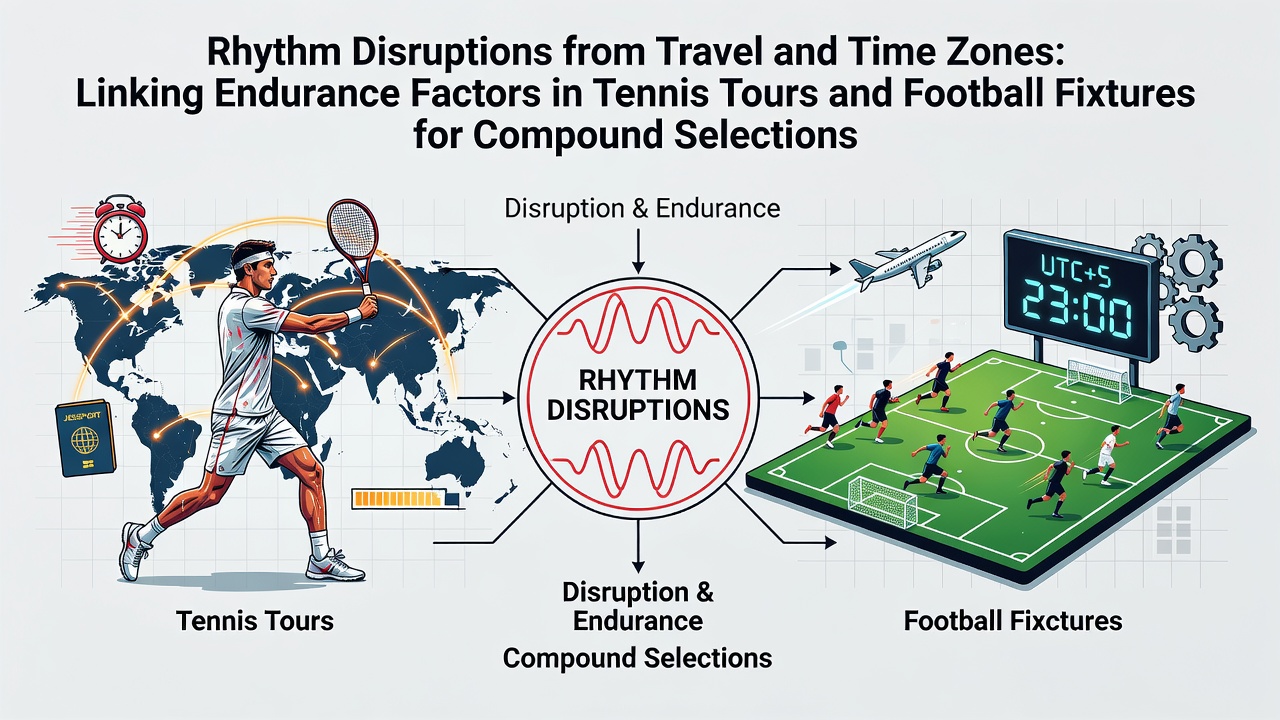
Rhythm Disruptions from Travel and Time Zones: Linking Endurance Factors in Tennis Tours and Football Fixtures for Compound Selections
Travel across multiple time zones disrupts circadian rhythms in professional athletes, and data from tennis tours plus football fixtures show measurable impacts on endurance that compound across consecutive events. Players and teams face repeated flights during the northern hemisphere summer months, when schedules intensify before major tournaments and league restarts. Research indicates performance metrics decline when recovery windows shrink below 48 hours after eastbound or westbound crossings, with effects appearing in serve percentages for tennis and high-intensity running distances for football.
Time Zone Shifts and Circadian Adjustment Patterns
Eastward travel typically requires more days for full adaptation than westward journeys because the body clock struggles to advance rather than delay. Observers note that ATP players crossing five or more zones report elevated ratings of fatigue during the first three days at a new venue, while similar patterns emerge in European football squads returning from South American or Asian friendlies. Studies compiled by the Australian Institute of Sport reveal that core body temperature rhythms and melatonin onset shift gradually at roughly one hour per day, creating a window where decision-making speed and muscle recovery slow measurably.
Football fixtures scheduled shortly after international breaks compound these issues when clubs must integrate players who flew across continents. Match data from major European leagues show reduced total distance covered in the opening 30 minutes of games following long-haul returns, even after two full training days. Tennis tournaments scheduled back-to-back in different hemispheres, such as the North American hard-court swing leading into the US Open, repeat the same cycle each August.
Endurance Metrics in Tennis Tours
Grand Slam preparation periods highlight how cumulative travel erodes baseline endurance. Players who contest events in Asia followed immediately by North America experience extended rally lengths in later rounds at lower success rates, according to ball-tracking statistics released by the ATP. Match durations extend when footwork and recovery between points slow, and five-set matches in August 2026 will test athletes who have already navigated multiple zone changes within a six-week window. Those who study tournament scheduling note that qualifiers often absorb the heaviest travel loads because they enter main draws after preliminary rounds held on different continents.
Cross-Sport Comparisons with Football Schedules
Football provides parallel examples when national team windows force club sides to absorb returning players with limited preparation time. League matches played within four days of long-distance flights show elevated rates of second-half substitutions for fatigue-related reasons. Data collected across Premier League and Bundesliga fixtures indicate that teams with three or more players returning from transatlantic travel record fewer high-speed runs in the final 20 minutes. Endurance monitoring through GPS devices confirms that heart-rate recovery intervals lengthen after zone crossings, mirroring patterns observed in tennis players during changeover periods.
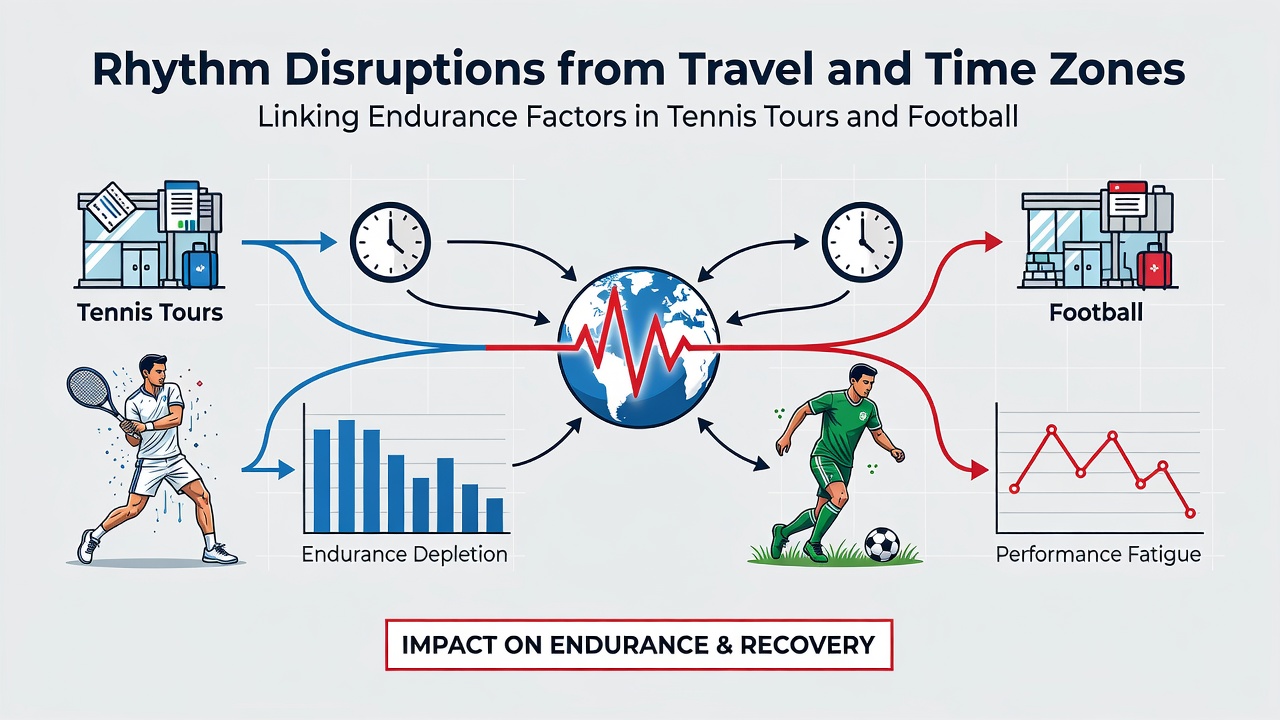
Compound selections that combine tennis matches and football fixtures therefore incorporate these overlapping endurance variables. When multiple events occur within the same 72-hour span, analysts track historical performance drops rather than relying on season-long averages. August 2026 schedules include overlapping hard-court tournaments and early domestic football rounds, creating repeated instances where travel-affected squads and players appear on the same betting slips.
Recovery Protocols and Scheduling Realities
Teams and individual athletes employ standardized recovery methods including light exposure timing, meal adjustments, and targeted sleep protocols. Yet even optimized routines leave residual effects when travel repeats every 10 to 14 days. Researchers from the Canadian Sport Institute have documented that cognitive tests administered 24 hours after arrival show slower reaction times persisting beyond the point where athletes report feeling normal. These subtle decrements translate into measurable statistical edges when selections span both sports.
Fixtures lists published for the 2026 calendar already flag several clusters where tennis players and football squads cross zones within the same week. Observers tracking these patterns compile historical datasets that isolate matches following travel as distinct from home-stand performances. The resulting models feed directly into multi-event selections that weight endurance variables more heavily than surface or opponent rankings alone.
Conclusion
Travel-induced rhythm disruptions create documented endurance shifts that link tennis tours and football fixtures through shared physiological responses. Performance records compiled across multiple seasons demonstrate consistent patterns when recovery time falls short, providing factual inputs for compound selections that account for these variables. As schedules intensify through August 2026 and beyond, those who analyze fixture lists alongside zone-crossing data gain access to structured information that reflects actual athletic demands rather than surface-level form guides.