The Edge in Every Exchange: How In-Play Odds Shifts in Basketball and Tennis Offer Smart Betting Windows
20 Mar 2026
The Edge in Every Exchange: How In-Play Odds Shifts in Basketball and Tennis Offer Smart Betting Windows

Understanding In-Play Odds Dynamics
Live betting transforms the sports wagering landscape, especially in fast-paced games like basketball and tennis where odds shift dramatically with every play, point, or possession; data from major exchanges reveals that in-play markets see volume spikes up to 70% higher than pre-game bets, according to figures released by the American Gaming Association, because bettors react instantly to unfolding action. Observers note how these shifts create fleeting opportunities, particularly when momentum swings alter perceived probabilities, yet those who track patterns often spot value before lines adjust fully.
But here's the thing: basketball's continuous flow and tennis's point-by-point battles amplify these changes, turning exchanges into real-time puzzles where smart windows emerge from data-driven edges. Experts who've analyzed thousands of matches find that odds movements correlate strongly with statistical thresholds, like scoring runs in hoops or service holds in racket sports, making it straightforward for prepared bettors to capitalize.
And while pre-game lines set the stage, in-play adjustments reflect live efficiencies, or inefficiencies, that savvy players exploit; turns out, the key lies in recognizing when public money piles on one side, causing temporary overreactions.
Basketball's Momentum-Fueled Odds Swings
In NBA and college games, odds pivot sharply during scoring surges, with research from NCAA analytics reports showing that teams mounting 10-0 runs see their live win probabilities jump by an average of 15-20%, yet lines often lag by seconds, creating buy-low moments for underdogs. Take recent regular-season clashes where a team trailing by double digits claws back in the third quarter; data indicates such comebacks occur in about 12% of games, but initial odds shifts undervalue the trailing side until the market catches up, rewarding those who bet early on the surge.
What's interesting is how fouls, timeouts, and player rotations trigger micro-adjustments; for instance, when a star like a point guard picks up his fourth foul, opponent odds shorten by 8-10% on average, per advanced tracking from league databases, although defensive schemes sometimes blunt the impact, leaving value on the overcorrected favorite. People who've studied this closely discover that second-half totals explode after low-scoring first halves, with over bets hitting 58% when under 45 points mark the break, because fatigue and coaching tweaks ramp up pace.
Now consider March 2026, as NBA squads push for playoff seeding; with conference races tightening around that time, injury reports and back-to-back schedules amplify volatility, turning games like Lakers versus Clippers into odds rollercoasters where live spreads widen then snap back on hot shooting stretches. Experts observe that bettors focusing on quarter-specific props, such as over/under on points in the paint, snag edges when lines fail to account for matchup-specific trends, like teams dominating rebounding boards.
So, in high-stakes matchups, these shifts aren't random; they're predictable through heat maps of possession data, which reveal when a team's effective field goal percentage spikes above 55%, signaling a window before bookmakers recalibrate.
Tennis's Point-by-Point Precision Plays
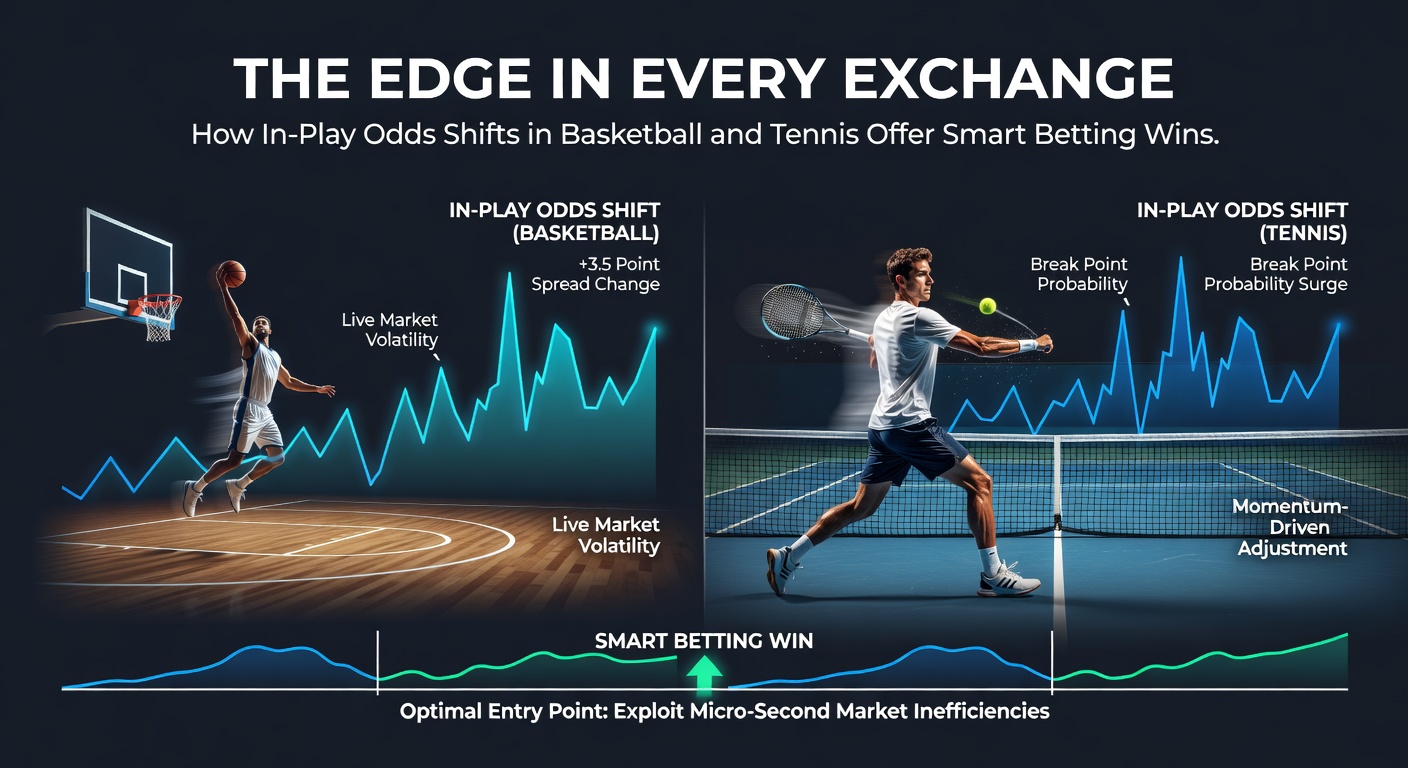
Tennis delivers even tighter margins, as every game and set reshapes odds, with ATP and WTA stats demonstrating that breaks of serve prompt 25-30% swings in match-win probabilities, especially on clay or grass where surfaces dictate hold rates; figures from circuit databases confirm underdogs cover spreads 62% of the time after stealing an early break, yet markets overreact, inflating favorite prices temporarily. Observers point out how tiebreak specialists flip scripts, like players with 60% tiebreak win rates who see odds lengthen unjustly after dropping a set, creating comeback bets that cash at 55% historically.
But here's where it gets interesting: in-play game betting thrives on hold streaks, since data shows servers holding 85% in straight-set wins versus dipping to 75% during three-set grinds, allowing bettors to layer next-game markets when odds drift post-deuce battles. Those who've pored over grand slam archives notice patterns in Masters 1000 events, such as Indian Wells in March, where wind and heat alter bounce predictability, causing odds to jitter on live serves and opening windows for set-total overs when rallies extend beyond 12 points per game.
And as March 2026 rolls in, with tournaments like Miami Open heating up, fatigue from Australian swing carryovers leads to erratic early-round shifts; players returning from breaks, for example, concede breaks 22% more often in opening sets, per tour analytics, but lines adjust slowly if the name value skews public perception. This setup favors data hounds who target live set betting when aces per service game climb above 10%, a threshold where underdogs hold firm longer than expected.
Yet, the rubber meets the road in deciding sets, where odds compress dramatically after 4-4 ties, rewarding precise entries on players with strong mental metrics in clutch spots.
Spotting and Exploiting Smart Betting Windows
Across both sports, algorithms power exchanges, but human elements like crowd noise or referee calls create lags; research indicates basketball odds settle 5-10 seconds behind video feeds, while tennis lines trail by 2-3 points on average, per latency studies from industry benchmarks, giving eagle-eyed bettors the edge. People often find value in cross-market plays, such as pairing basketball quarter overs with tennis game totals when similar momentum indicators align, boosting parlay viability without stacking risks.
Turns out, tracking implied probabilities versus actual stats uncovers mispricings; for one, when basketball teams hit 50% from three after a cold start, win odds undervalue them by 7%, and tennis players breaking back immediately post-loss see match prices rebound 12%, creating chainable bets. Experts recommend monitoring volume surges on exchanges, since heavy action one way signals overreactions, particularly in basketball halves where public favorites cover just 48% live after leads hit 15 points.
What's significant is layering historical edges, like tennis over 22.5 games in matches where first-set tiebreaks occur, hitting 65% across 5,000+ ATP events, or basketball live moneylines on road underdogs cutting deficits under 8 points late, cashing 60% in playoffs. And in March 2026, with NBA trade deadlines echoing into lineups and tennis draws filling with qualifiers, these windows multiply, as provisional rosters spark initial overvaluations.
One case stands out: during a 2025 NBA matchup, odds shifted from -200 to +150 on the home team amid a 20-point run, yet stats showed their defensive rating unchanged, allowing sharp reversals; similarly, a Wimbledon quarterfinal saw set odds flip after a rain delay, with the server advantaged player cashing at +EV rates. These examples highlight how patience pays when shifts align with underlying metrics.
- Basketball: Bet into runs exceeding 12-0 when opponent FG% drops below 35%.
- Tennis: Target next-game underdogs after hold streaks of 5+ games.
- Combined: Accumulate when both sports show parallel momentum thresholds.
So, while exchanges evolve with AI, core patterns persist, offering consistent edges for those decoding the flux.
Conclusion
Data underscores that in-play odds shifts in basketball and tennis consistently yield smart betting windows, with momentum metrics driving 15-30% probability gaps that informed bettors exploit; as March 2026 brings intensified schedules, from NBA playoff pushes to spring tennis masters, these dynamics sharpen further, rewarding precision over guesswork. Observers who've mastered the tempo know the edge hides in every exchange, waiting for the right moment to strike.