13 Jul 2026
Venue Switches and Travel Fatigue: Mapping How Relocations Shape Edges in Football, Tennis, and Basketball Seasons
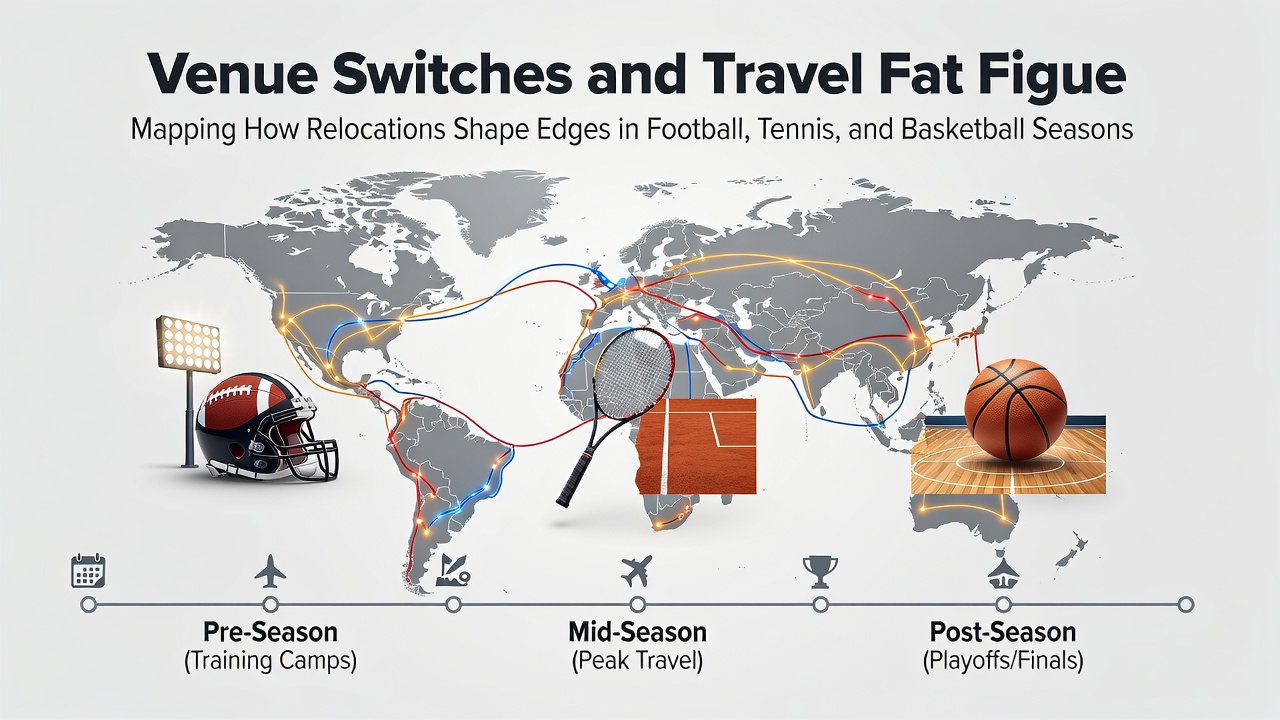
Venue switches and extended travel create measurable impacts on player performance across football, tennis, and basketball, with data from multiple seasons showing patterns in recovery times and output metrics. Researchers track how relocation distances, time zone crossings, and schedule densities alter physical and tactical edges, particularly when teams or individuals move between home and away environments repeatedly throughout a campaign. In July 2026, off-season preparations for upcoming leagues will incorporate these variables into training protocols based on historical datasets from prior years.
Football Relocations and Schedule Disruptions
Football schedules often require clubs to shift between domestic leagues and continental competitions, where distances can exceed several thousand kilometers within weeks. Studies from the Australian Institute of Sport document how transcontinental flights correlate with reduced high-intensity running distances in the first 48 hours after arrival. Teams that alternate between northern and southern hemisphere venues experience compounded effects from climate adjustments alongside jet lag, which influences passing accuracy and defensive positioning according to league-wide tracking systems.
Observers note that midweek cup ties followed by weekend fixtures amplify these pressures, yet squads with dedicated recovery staff maintain closer to baseline performance levels. Data from European domestic campaigns reveals that clubs traveling over 1,000 kilometers for away matches post fewer shots on target in the opening 30 minutes compared to those with shorter journeys. Venue switches within the same country produce milder disruptions, although pitch dimensions and surface types still require rapid adaptation that affects set-piece execution.
Tennis Tournament Circuits and Cumulative Fatigue
Tennis players navigate a global calendar that forces consecutive weeks of relocation between hard courts, clay surfaces, and grass venues. Grand Slam events and Masters tournaments cluster in specific regions, creating sequences where athletes cross multiple time zones between stops. Performance analytics indicate that serve percentages drop when matches occur within 72 hours of long-haul flights, while return game statistics show greater variability during the initial rounds of new tournaments.
Those who study individual player logs find that back-to-back events on different continents produce elevated error rates in tiebreaks, particularly when humidity and altitude differ sharply from previous locations. July 2026 will see several ATP and WTA events scheduled in quick succession across Asia and Europe, prompting support teams to prioritize sleep scheduling and nutrition timing. Surface transitions from clay to grass demand technical adjustments that compound when travel fatigue already reduces reaction speed, leading to measurable shifts in point construction patterns tracked by tournament statisticians.
Basketball Conference Shifts and Recovery Windows
Basketball seasons feature dense travel within conferences, where teams move between arenas separated by hundreds of kilometers on consecutive nights. Research published through NCAA-affiliated programs highlights how back-to-back road games correlate with decreased three-point shooting efficiency and increased turnover rates during the second contest. Venue changes within the same arena type still introduce variables such as rim height tolerances and court lighting that interact with physical depletion from flights and bus rides.
International competitions add another layer, as national team duties during breaks force additional relocations that overlap with club schedules. Data sets from professional leagues show that teams returning from overseas commitments post lower defensive rebound percentages in their first few domestic games. Schedule makers attempt to cluster eastern and western conference games to minimize coast-to-coast jumps, yet compressed playoff formats leave limited recovery windows that amplify the effects of repeated venue switches.
Cross-Sport Patterns in Adaptation Strategies
Common threads emerge when comparing relocation effects across these three sports, including the role of advance scouting and environmental familiarization. Football squads conduct pitch walks and video sessions upon arrival, tennis players adjust string tensions and footwear based on surface reports, and basketball teams review arena-specific sightlines during shootarounds. These preparations mitigate some performance dips, although studies consistently link cumulative travel load to elevated injury incidence in later season stages.
Figures from multi-year tracking initiatives reveal that athletes who incorporate targeted recovery modalities such as compression therapy and light exposure management sustain higher output metrics after venue changes. The timing of arrivals relative to match starts also factors into outcomes, with earlier flights allowing partial acclimatization that preserves decision-making speed under fatigue.
Conclusion
Venue switches combined with travel demands reshape competitive edges through documented physiological and technical adjustments across football, tennis, and basketball seasons. Performance datasets continue to map these variables as schedules evolve, providing frameworks for preparation that address relocation sequences directly. In July 2026, teams and players will apply refined protocols derived from ongoing analysis to navigate the next cycle of movements.