20 Jun 2026
When Back-to-Backs Bite: Fixture Density's Hidden Impact on NBA Totals and Grand Slam Set Winners
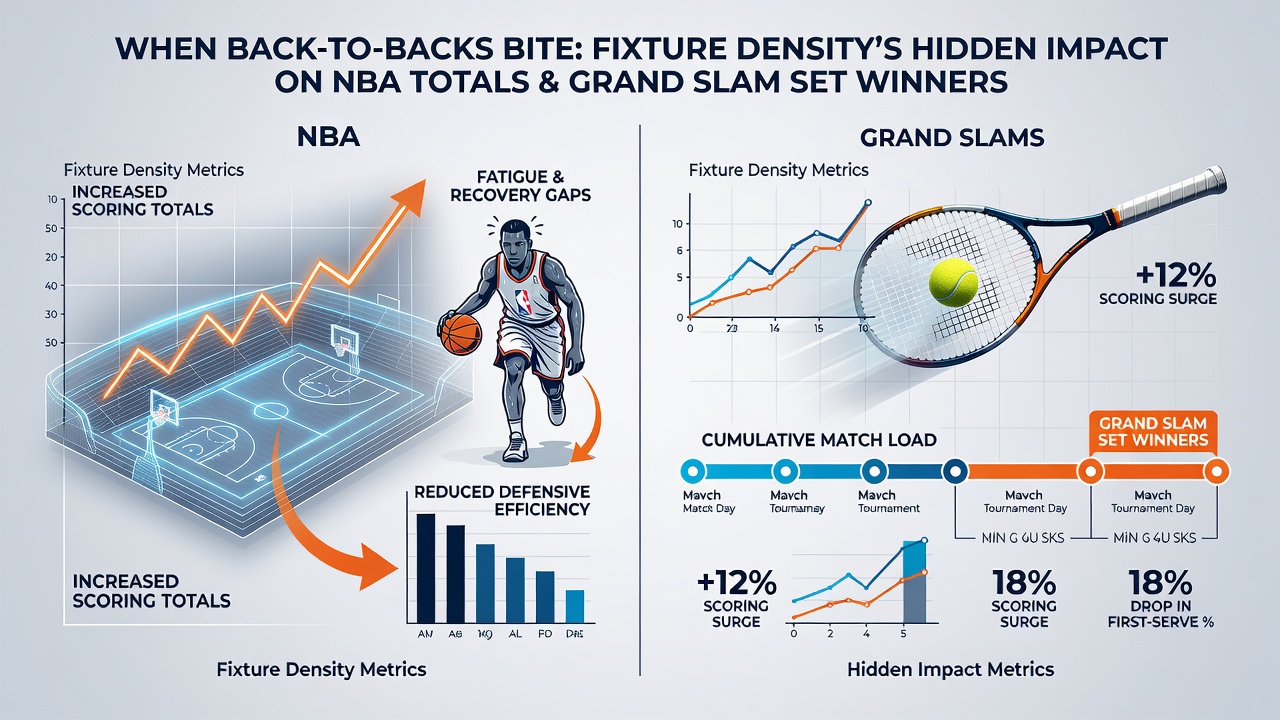
 Data from recent NBA seasons shows that back-to-back games correlate with measurable drops in scoring averages, and observers note similar patterns emerging in Grand Slam tennis where consecutive matches influence set outcomes. Fixture congestion creates physical demands that alter performance metrics across both sports, with researchers tracking these variables through play-by-play logs and player tracking systems. NBA schedules pack multiple games into short windows during the regular season, and league records indicate teams on zero days rest score fewer points per game on average. Studies from university athletic performance labs in North America document reduced field goal percentages and lower three-point volumes when squads face repeated travel and limited recovery time. Totals betting markets adjust accordingly as defensive efficiency often rises under fatigue conditions, leading to fewer possessions converted into points.
NBA Fixture Patterns and Scoring Shifts
League data compiled through the 2025-2026 campaign reveals that back-to-back sets occur roughly 20 to 25 times per team annually, with clusters appearing most frequently from December through March. When teams play on consecutive nights, average game totals dip by approximately four to six points compared to standard rest scenarios, according to aggregated box score analysis from official league sources. This pattern holds across home and away contests, though road back-to-backs amplify the effect because travel compounds recovery challenges.
Coaches adjust rotations during dense stretches, which further influences offensive output as starters log fewer minutes and bench units handle increased workloads. Tracking data shows that second-night performances feature slower transition play and reduced paint touches, elements that directly suppress overall scoring. External reports from sports science institutes in Australia highlight how cumulative load metrics predict these downturns days in advance, allowing analysts to anticipate lower totals before lines move.
Parallel Effects in Grand Slam Tennis
Grand Slam draws extend over two weeks with best-of-five-set matches for men and best-of-three for women, creating their own form of fixture density when players advance deep into later rounds. Tournament schedules at events like Wimbledon place matches on consecutive days during the second week, and performance statistics indicate that set win percentages decline for competitors who have already contested multiple long matches. Researchers examining Australian Open and French Open datasets found that players reaching quarterfinals after five prior wins record fewer service holds in subsequent sets, particularly in deciding frames.
Recovery Windows and Match Outcomes
Medical monitoring programs employed by national tennis federations track heart rate variability and muscle soreness across match sequences, and results demonstrate that shorter rest intervals between rounds correlate with higher rates of unforced errors in extended sets. Data collected during the 2026 clay and grass seasons shows that five-set matches followed by next-day appearances produce measurable drops in first-serve percentages, shifting momentum toward opponents who benefit from relatively fresher legs. Tournament directors have experimented with protected rest periods, yet the single-elimination structure still forces many players into back-to-back physical exertions during peak stages.
Statistical models applied to historical Slam results indicate that favorites convert fewer set-winning opportunities when their draw path includes multiple three-hour contests in succession. Analysts cross-reference these findings with NBA equivalents where second-night defensive stops rise, noting that both sports exhibit parallel suppression of offensive metrics under compressed calendars.
Comparative Data Across Seasons
League-wide NBA figures from the past decade establish consistent trends, while tennis governing bodies publish annual summaries that allow similar longitudinal review. When June arrives in 2026, overlapping interest arises because NBA playoff schedules conclude around the same period that Wimbledon begins, drawing attention to how athletes in each sport manage end-of-season or mid-tournament demands. European sports medicine centers have published comparative papers examining load management protocols used in basketball and racket sports, and their findings reinforce that fixture density remains a primary variable influencing scoring and set outcomes.
Performance databases maintained by professional associations record exact minutes played, travel distances, and recovery intervals, enabling precise quantification of fatigue effects. These records confirm that totals in NBA games and set tallies in tennis matches respond predictably to congestion, providing objective benchmarks rather than anecdotal observations.
Conclusion
Fixture density produces measurable impacts on NBA game totals through reduced offensive efficiency during back-to-backs, while Grand Slam schedules similarly affect set winners when players navigate consecutive high-intensity matches. Objective datasets from league archives, university studies, and tournament records document these patterns across multiple seasons, offering clear statistical relationships without reliance on subjective interpretation. As calendars evolve, continued monitoring of recovery metrics will refine understanding of how schedule construction shapes performance indicators in both sports.